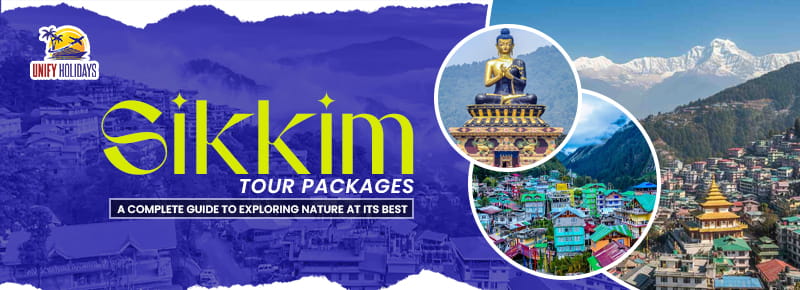
Sikkim isn't the kind of place that forgives poor planning; the terrain is remote in parts, the permit requirements are real, and the weather has its own agenda. But when the trip is well put together under North East trip packages, it delivers something hard to find anywhere else in the country.
Sikkim tour packages are among the best ways to experience India's most genuinely beautiful state without spending weeks sorting out permits, routes, and accommodation in a region that demands preparation.
What makes Sikkim different from other hill destinations is the combination of mountains that actually feel close, monasteries that have been sitting on hillsides for centuries, valleys that fill with wildflowers in spring and disappear under snow in winter.
Sikkim has quietly become one of the most sought-after destinations in Northeast India, particularly for travelers who have done the usual hill stations and want something that feels less curated. It has culture, landscape, altitude, and a pace that forces you to slow down in the best possible way.
Why You Should Choose Sikkim Tour Packages?
Sikkim tour packages save you from the specific kind of travel stress that comes with a destination that has genuine logistical complexity. This isn't a place where you can show up without planning and figure it out as you go. Permit requirements for places like Nathula Pass and North Sikkim need to be arranged in advance, routes change with the weather, and the best accommodation fills up quickly during peak travel months.
A good package handles all of that before you leave home. Permits are sorted, transport between destinations is arranged, hotels are booked, and the daily plan is already mapped out. You arrive in Gangtok with nothing to organize and everything to look forward to.
The cost argument for packages is straightforward in Sikkim specifically.
Transport in this region, especially to higher altitude destinations, isn't cheap when arranged independently. Hotels near the better viewpoints book up and price up during peak season. Packages bundle these together at a combined cost that's almost always lower than the sum of its parts, and the predictability of a fixed package price makes budgeting for the trip much easier.
Different travelers find different things in Sikkim, and good packages reflect that. Couples looking for a quiet mountain escape, families who need comfortable pacing and safe routes, solo travelers who want the freedom to explore without managing logistics, adventure travelers who want the road trips and remote areas, there are genuine options for all of these, not just one standard trip with minor variations.
The guided element matters particularly in Sikkim. The monasteries have a history and meaning that a first-time visitor can't access just by walking through them. The landscape has context, geographical, cultural, and ecological, which a local guide conveys in a way that makes the experience much richer than it would be otherwise.
The Top Tourist Destinations in Sikkim
Gangtok
Gangtok is where most Sikkim trips begin, and it earns its place as the starting point. As the capital city, it has better infrastructure than the rest of the state, but it doesn't feel urban in the way that most state capitals do. The mountains are visible from the town, the air is clean, and MG Marg, the main pedestrian street, has a kind of easy, unhurried atmosphere that makes a first evening in a new place feel immediately comfortable.
From Gangtok, most of the major destinations are accessible as day trips or short drives, making it a natural base for the first part of any Sikkim itinerary. The ropeway gives you an aerial view of the surrounding valleys, which sets the visual tone for everything that follows.
Nathula Pass
Nathula Pass sits at over 14,000 feet on the Indo-China border, and it's the kind of place that people describe carefully because the experience is hard to reduce to a simple description. The altitude is felt immediately.
The landscape is stark and open in a way that feels both dramatic and oddly peaceful. The border between India and China, which is marked and patrolled, gives the visit a weight that purely scenic destinations don't carry.
Permits are required and non-negotiable, which is why this destination works best when you book a package where the paperwork is handled before you arrive.
Tsomgo Lake
Tsomgo Lake sits at around 12,400 feet, and it changes completely depending on when you visit. In winter, it freezes over entirely and becomes an expanse of ice surrounded by snow-covered slopes that look almost unreal in good light. In spring and summer, it melts into a reflective alpine lake with the surrounding mountains mirrored in the water. In autumn, the hillsides around it turn color in ways that make it worth visiting the landscape.
Yak rides around the lake are something most visitors do once and remember for a long time. The surrounding mountains, the altitude, and the general remoteness of the location make Tsomgo one of those places that looks exactly as good in person as it does in photographs.
Pelling
The town itself is small and unhurried, but the view of the Kanchenjunga range filling the horizon on clear mornings is one of the best mountain views available from any town in Sikkim. Waking up early and sitting with that view before the clouds move in is the kind of experience that people build their itineraries around.
The Pemayangtse Monastery nearby is one of the oldest and most significant in Sikkim. The interior is detailed, and the history behind it adds layers to what you're looking at. The Rabdentse ruins, the old capital of Sikkim, are a short walk from the monastery and are worth including in the same afternoon. Kanchenjunga Falls and Rimbi Falls are both accessible from Pelling and are worth visiting if the timing and weather allow.
Lachung and Yumthang Valley
Lachung is a small mountain village that serves as the overnight base for Yumthang Valley, and the village itself is worth the journey even before you reach the valley. It sits in a narrow valley with the river running through it and the mountains pressing in on both sides, and it has the kind of character that comes from a place that hasn't been significantly altered by tourism.
Yumthang Valley, often called the Valley of Flowers, is what most people come to North Sikkim to see, and it justifies the description. In spring, particularly April and May, the valley floor fills with primulas, rhododendrons, and wildflowers in quantities and colors that seem excessive in the best possible way.
In winter, the same valley is buried under snow and has a completely different, equally compelling character. The hot springs near Yumthang are genuinely therapeutic after a long day of high-altitude travel.
Zero Point, further up from Yumthang, sits at nearly 15,000 feet and is where the road ends and the snow begin for most of the year. It's the most accessible point in this part of Sikkim, and the views justify the extra driving time without question.
Different Types of Sikkim Tour Packages
Honeymoon Packages
Sikkim honeymoon packages work because the destination is naturally romantic without needing to be manufactured into it. It consists of mountain views, quiet evenings, accommodation with fireplaces, and valley-facing windows. These things exist in Sikkim without requiring premium additions. Couples who come here for a honeymoon tend to leave feeling like they found something genuinely special rather than just well-organized.
Family Tour Packages
Family packages in Sikkim are built around the reality that altitude and remote terrain require more careful planning when different ages and fitness levels are involved. Routes are chosen with comfort in mind; accommodation is selected for accessibility, and the pace is built around enjoying each destination. The result is a trip that works for everyone in the family rather than just the most energetic members.
Budget Tour Packages
Budget Sikkim packages exist for students, backpackers, and young professionals who want the experience without financial strain. It includes basic but clean accommodation, shared transport, and the main sights. These packages make Sikkim accessible to people who would otherwise feel priced out of a destination that can be expensive when arranged independently.
Adventure and Road Trip Packages
Sikkim is among the most dramatic road trip routes in India. Adventure packages build itineraries around the driving experience, with stops in remote areas that more conventional packages don't include.
North Sikkim Special Packages
North Sikkim, such as Lachung, Lachen, Yumthang, Gurudongmar Lake, is the most remote and in many ways most extraordinary part of the state. These packages focus specifically on this region and are built around the permit requirements and travel conditions that make North Sikkim different from the rest of the itinerary.
What are The Best Time to Visit Sikkim?
March to June is when Sikkim is most accessible and most visually spectacular. The weather is comfortable for travel; the rhododendrons are blooming across the hillsides, Yumthang Valley is at its colorful best, and the roads are at their most reliable. It is also the peak season for good reasons.
October to February brings cold and snow, which transforms the landscape into something completely different. Tsomgo Lake freezes, Nathula experiences snowfall, and the high-altitude destinations take on a starkness that has its own powerful appeal. Travelers who specifically want snow experiences build their trips around this window.
Monsoons are roughly from July to September, and it brings heavy rainfall that makes some roads unreliable and some destinations inaccessible. The landscape is extraordinarily green, and the waterfalls are their most powerful, but travel requires more flexibility and caution than in other seasons. It's not impossible, but it needs more careful planning.
What Are the Different Ways to Reach Sikkim?
Pakyong Airport is the closest to Gangtok, but Bagdogra in West Bengal has better flight connectivity from most major cities and is the most practical arrival point for most travelers.
New Jalpaiguri is the nearest major railway station, well-connected to the rest of India, and a reasonable starting point for the road journey into Sikkim.
The road from Siliguri to Gangtok is the standard entry route and takes around four to five hours, depending on traffic and road conditions. The drive itself through the foothills and then up into the mountains is a good introduction to what the rest of the trip will look like.
What are the Travel Tips You Need When Exploring Sikkim?
Bring Warm Clothes
Warm clothing is essential regardless of when you travel. Even in summer, higher altitude destinations drop significantly in temperature, and the shift from Gangtok to Nathula or Yumthang can feel like a different season entirely.
Get A Permit in Advance
Permits for Nathula Pass and North Sikkim need to be arranged in advance. This is not a formality that can be sorted on arrival as it requires proper documentation and lead time, which is one of the strongest practical arguments for booking through a reliable travel partner.
Move Slowly and Stay Hydrated
Altitude affects people differently, and Sikkim's higher destinations are high enough to cause real discomfort for travelers who push too hard. Therefore, move slowly, stay hydrated, and take the first day at a lower altitude.
Keep the Environment Clean
Sikkim has a well-earned reputation for cleanliness; it was the first organic state in India, and the general attitude toward the environment is noticeably different from most tourist destinations. Therefore, do not litter around and respect the locals.
Why Book Your Sikkim Package from Unify Holidays?
At Unify Holidays, we plan your Sikkim trips the way they should be planned. Our team creates itineraries that reflect real preferences, pricing is honest, and our support doesn't end when the booking is confirmed.
We have many years of experience in helping travelers explore the Northeast of India. We understand Sikkim's particular requirements: permits, seasonal road conditions, altitude considerations, and the difference between different destinations.
Our pricing is also transparent, support is genuinely available throughout the journey, and the local understanding behind the itineraries makes a difference.
In Conclusion
The right Sikkim tour package makes it possible to experience all of that without the logistics getting between you and the place itself. Whether it's a first visit or a return trip to see what you missed, Sikkim is the kind of destination that always has something more to give and that's exactly why people keep going back.