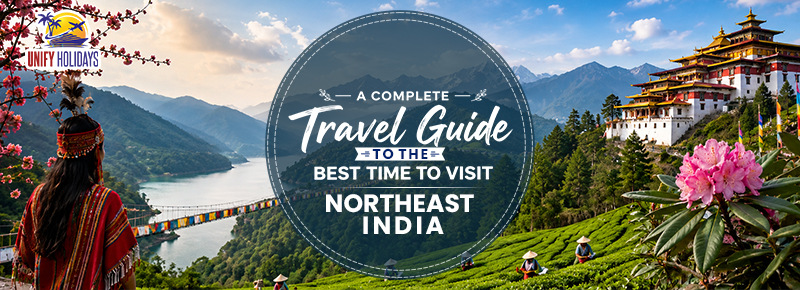
Northeast India is one of those places in the country that people put off visiting for years, and after exploring it, immediately regret not going sooner. Eight states, each genuinely different from the last. Landscapes that go from flat tea-garden plains to snow-covered mountain passes within a few hours of driving. Tribal cultures that have been here for centuries and feel nothing like the rest of India.
This is also a region where the season you choose changes everything. Come at the wrong time, and rain-soaked roads, washed-out trails, or biting cold can make even beautiful places difficult to enjoy. Come at the right time, and the whole trip feels effortless.
In this guide, Unify Holidays covers the best time to visit Northeast India by season, by month, and by what kind of traveler you are.
What Is the Weather Like Across Northeast India?
How Different Is the Climate from State to State?
Very different, and that is something most people do not realize until they are planning the trip. Assam's plains are warm and humid for most of the year. Meghalaya sits in one of the rainiest belts on the planet. Cherrapunji and Mawsynram regularly record the highest annual rainfall in the world.
Sikkim and Tawang in Arunachal Pradesh are cold and snowy in winter, with mountain passes that close entirely when the snow gets heavy enough.
| Season | Months | Temperature | What to Expect |
| Summer | March to June | 15°C – 30°C | Pleasant, green, clear skies |
| Monsoon | July to September | 20°C – 28°C | Heavy rain, waterfalls in full force, some road disruptions |
| Autumn | October to November | 10°C – 25°C | Dry, clear, festival season at its best |
| Winter | December to February | 0°C – 15°C | Cold, snowfall at altitude, peak tourist season |
What Are the Best Seasons to Visit?
Is Summer Worth Considering?
March to June is one of the quietest and most comfortable windows to visit, and the region looks beautiful during these months.
The rhododendrons in Sikkim bloom from March through May and turn entire hillsides red and pink. The forests in Meghalaya are green and full without being waterlogged. Ziro Valley in Arunachal Pradesh is peaceful and warm, surrounded by a landscape that makes you want to slow down.
Good Destinations for a Summer Visit
- Sikkim: Clear Kanchenjunga views in the morning, wildflowers everywhere, and far fewer tourists than October brings. This is Sikkim at its most relaxed.
- Meghalaya: The living root bridges, the waterfalls around Cherrapunji, and the drives through pine forest around Shillong are all at their best before the monsoon arrives.
- Arunachal Pradesh: Ziro Valley in spring is quietly spectacular. The Apatani tribal villages, paddy fields, and pine hills make it unlike anywhere else in India.
What To Do in Summer
- Trek before the trails turn slippery
- Go bird watching. Spring is the best window for migratory species across the region
- Visit tribal villages in Nagaland and Arunachal Pradesh
- Explore river valleys and forest trails in Sikkim
If you are travelling with family or it is your first time in the region, summer is a good choice.
What Is Monsoon Travel Like?
Difficult in some places and extraordinary in others. July to September brings relentless rain across most of the region. Some roads wash out. A few remote areas become unreachable. Travel plans have to stay flexible, or the whole trip becomes frustrating.
But then you see Nohkalikai Falls at full power in Cherrapunji, and you understand why some people specifically choose to come during monsoon. The waterfalls are thundering. The forests are so green they look unreal. The mist that rolls through the valleys in the early morning is something photographers plan trips around.
Best Places to Visit During Monsoon
- Cherrapunji: The waterfalls here are at their most powerful and most impressive. If dramatic natural scenery is the goal, this is the season.
- Mawsynram: One of the wettest places on earth. Genuinely beautiful if you are prepared for what you are getting into.
Things to Sort Out Before a Monsoon Trip
- Waterproof bags, proper rain gear, and waterproof boots are non-negotiable
- Keep your itinerary loose, as delays happen, and fighting them only makes things worse
- Check road conditions before heading anywhere in the hills
- Do not trek alone on remote trails after heavy rainfall
- Book accommodation ahead of time since options in smaller towns are limited
Monsoons are not the right choice for everyone. But the right traveller, with the right preparation, can have a trip here that feels unlike anything else.
Why Do Most People Come in Winter?
It is the best time for most of what Northeast India offers. October to February is peak season here, and it earns that reputation. The rain is gone. The skies clear up completely. Tawang and Gangtok get snow. The Hornbill Festival happens in December. The whole region feels alive in a way that the rainy months cannot match.
What Are the Best Places to Visit in Winter?
- Tawang: Snow starts falling in December, and the whole place transforms. The monastery, the frozen lakes, and the mountain views on a clear day are the kind of thing that stays with you.
- Gangtok: Cool, comfortable, and beautifully positioned for Kanchenjunga views. The cable car over a snow-dusted landscape is a highlight for most visitors.
- Shillong: Pine forests, crisp air, and a laid-back atmosphere that earns the Scotland of the East nickname, especially in the cooler months.
What Winter Brings Beyond the Scenery
- Hornbill Festival in Nagaland in early December: Tribal music, dance, food, and crafts from sixteen different tribes
- River rafting on the Teesta and Brahmaputra
- Snow activities in Tawang and upper Sikkim
- High-altitude trekking with the clearest visibility of the year
Where to Explore in Different Month When Exploring North-east India
March to May: Go for Nature and Peace
This is a sweet spot for travellers who want beautiful scenery, comfortable weather, and room to breathe. Flowers are blooming, trekking conditions are at their best, and the popular spots are not overwhelmed with visitors.
June to September: Go to Waterfalls and Green Landscapes
If dramatic scenery is a priority and you do not mind some rain and unpredictability, this window delivers something genuinely special. Prices are lower, crowds are thinner, and the landscapes are at their most lush.
October to February: Go for Snow, Festivals, and Romance
This is the season most people choose for a good reason. Clear weather, cultural festivals, snowfall at higher altitudes, and the kind of scenery that makes every photo look like it was taken by a professional. Book accommodation early for October and November, as the popular towns fill up fast.
| Traveller Type | Best Window | Why It Works |
| Honeymoon couples | October to February | Snow, scenic hill stations, cool romantic atmosphere |
| Adventure lovers | March to May or December to February | Trekking or snow activities at their best |
| Families | March to June | Comfortable weather, easy access, variety of activities |
| Budget travellers | June to September | Lower prices, fewer crowds, dramatic scenery |
| Wildlife enthusiasts | November to April | Kaziranga water levels drop, wildlife easily spotted |
Which Festivals Are Worth Planning Around?
- Hornbill Festival: December, Nagaland
Ten days in the first week of December at Kisama Heritage Village near Kohima. Sixteen tribes of Nagaland come together for music, dance, food, and crafts. It is one of the most extraordinary cultural experiences in India and is worth building an entire trip around.
Bihu: April, Assam
The Assamese New Year and harvest festival. Traditional music, Bihu dancing, and community celebrations across the state. Visiting Bihu gives you a real sense of how warm and welcoming Assamese culture is.
- Losar Festival: February or March, Sikkim and Arunachal Pradesh
The Tibetan New Year celebrated across the Buddhist communities of the region with monastery rituals, colourful mask dances, and festivities that let visitors see this culture properly rather than just from the outside.
- What Do You Need to Sort Out Before Exploring Northeast India?
Permits matter: Arunachal Pradesh requires permits for all visitors. Indian nationals need an Inner Line Permit; foreign nationals need a Protected Area Permit. Parts of Sikkim also have restricted zones. Sort these out well in advance. Last-minute permit applications often do not work out.
Pack for your actual season: Winter in Tawang needs thermals, a serious jacket, and warm boots. Monsoon travel needs waterproof gear for everything. Do not underestimate either.
Connectivity drops off in remote areas: Download offline maps before you leave. Carry cash. Digital payments work in the cities but not everywhere beyond them.
Respect local culture: Dress modestly at monasteries and in tribal areas. Ask before you photograph people. The communities here have their own protocols around visitors, and taking a moment to observe them makes a genuine difference to how welcome you feel.
Road travel takes time. Flights get you to Guwahati, Bagdogra, or Imphal. Everything after that is road travel through mountain terrain that moves at its own pace. Build that time into your itinerary rather than fighting it.
Places Worth Making Time For
- Kaziranga National Park, Assam: One-horned rhinoceroses, elephants, tigers, and some of the best wildlife viewing in India. Visit between November and April.
- Ziro Valley, Arunachal Pradesh: Quiet, beautiful, and culturally fascinating. Best in March to May or September to October.
- Dawki, Meghalaya: The Umngot River is so clear that boats look like they are floating in the air. November to March for the clearest water.
- Pelling, Sikkim: Kanchenjunga views, monasteries, and good trekking access. October and November are the best months to be there.
So, When Should You Explore Northeast India?
October and November are the best months if you want the most reliable combination of good weather, clear skies, accessible destinations, and cultural richness. It is the window that works for the widest range of travellers and the one where Northeast India tends to show its very best side.
March to May if you want something quieter, just as beautiful, and with more breathing room at the popular spots.
Unify Holidays puts together Northeast India packages designed for your travel style and the season that suits you best. If you are ready to stop putting this trip off, get in touch and let us help you plan it properly.